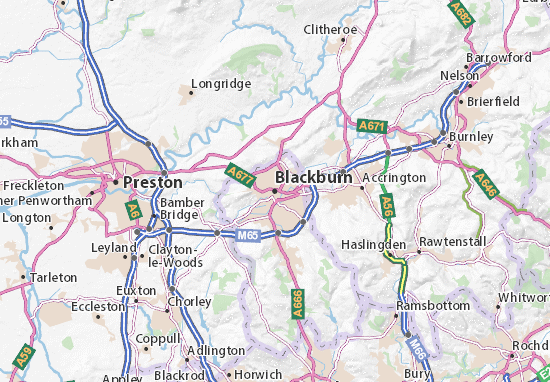
Drug Addiction in Blackburn: Is It Really What You Think It Is?
Drug addiction is an awful thing, people often generalise when speaking of drug users or drug addicts to the stronger elements, but the practical reality of things is that many of us are dependant on some chemical to some degree. That early morning cuppa you need before you can even start with your day? Well that contains caffeine. Got a bit of a headache and need a clear head for what you are about to do? Paracetamol this time. Friday night at the pub? Alcohol.

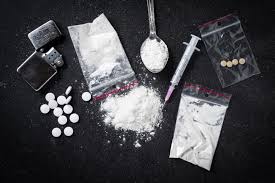
The reality of our world is that we all have an addiction of some sort so why do we tend to generalise like this? My little brother passed away due to participating in narcotics, but does doing that make him any different from us? Communities across the UK are seeing greater impact by use of narcotics and lesser usage of the more ‘traditional’ drugs. In fact, in 2015/16 the NHS website announced that nearly 1 in 12 of us aged between 16 and 59 had taken an illicit drug of some form in the last year within the UK. That is the equivalent of nearly 3 million people, or a city the size of Buenos Aires, just take a second to contemplate that.

Blackburn has recently been in the spotlight for similar reasonings with the BBC participating in The Big Build for Children in Need where an old church hall was converted into homes for the homeless on behalf of Nightsafe, where we often stereotype that the homeless must have got involved in illicit behaviours to find themselves in their circumstances. The Office for National Statistics state that in 2017 there was a total of 7,697 alcohol related deaths. In relation to drug poisoning deaths, what figure? 3,756.
So, What Is It That Causes These Opinions?
Well as I have referenced to above, stereotyping plays a massive role in this. Cardwell (1996) defines a stereotype as ‘…a fixed, over generalised belief about a particular group of people or class of people’ (e.g. Cannabis smokers being ‘stoners’) and as less is known about drug addicts we generalise what little knowledge we do have across the group itself in order to come to these opinions. What’s more, as we have coverage of these issues via the media we further buy into these similar thoughts and feelings as if we are being taught to by the various outlets.

And this isn’t the only means by which our opinions (which as the statistics above show aren’t necessarily correct) we can use social grouping as further reasoning for our generalisations. As many of us are work-a-day, 9-5 people who go about our own business and don’t involve ourselves in the usage of narcotics we can classify ourselves as the ‘in-group’, and those who don’t participate in the same way as the ‘out-group’. Tajfel and Turner (1979) intimated within their Social Identity Theory that the groups in which we participated play a very important role in our lives and gives us a sense of belonging. So when you consider the subject of drug addiction to be a dark and sinister one, and that how addicts do associate together (the ‘out-group’), whilst those of us who do not participate in these behaviours consider ourselves ‘normal’ or the ‘in-group’, are we really? I myself like a drink or two on occasion but as the statistics show above what I am actually doing holds double the risk of death than if I was to participate in drug-related behaviour so the question I ask myself and of you is whether or not drug addiction really is what it is?

Furthermore, as part of Social Identity Theory Tajfel and Turner extended on this with their Minimal Group Theory which lends to our further views on drug addiction and prejudice towards drug addicts as a group. Minimal Group Theory suggests that segregating ourselves into groups is enough to cause prejudice towards each group (similar to the in-group and out-group categorisation), as drug addicts are acknowledged to be the smaller of the groupings it is therefore very easy for us to put our opinions and our prejudices upon them, when we don’t even consider for a second that our Friday night out at the pub having a few drinks puts us into a larger social group and potentially an even more damaging social group than the ones that are participating in illicit behaviours.
So, What Does All of This Actually Mean?
I will be the first to acknowledge (as somebody who has never touched drugs, per se) that I was as judgemental as you could possibly be of my little brother’s behaviours. I regularly shouted at him, told him to change his ways and cast aspersions upon him for the way he lived his life but when you read the above it does lead me to several points and questions. Looking from the outside in, what’s worse: my beer on a Friday night or the taking of illicit drugs?
Further to that:
- What gives me, or anybody else the right to judge somebody else’s behaviour when it is obvious that my behaviour is potentially more damaging than their behaviour?
- Why do we deem it right to treat a minority group (e.g. Teenage glue sniffers) with stereotypes, prejudice or as an out-group when by rights and further analysis…it is ourselves that should be acknowledged as the ones showing the more dangerous and damaging behaviour?
So how do we now go about changing opinions associated with drug usage and addiction? Petty and Cacioppo (1986) devised a plan based around 2 routes of action to develop change in people with their Elaboration Likelihood model. This model observes that when we are motivated and showing attention we take a logical mentality to our decision making, in these circumstances we can cause permanent change in our behaviour as we are inclined to adapt our behaviour in accordance with the person we are speaking to. In other instances, we can take a more peripheral route and rather than acknowledging the speaker’s terms we are inclined to adapt as we may like who we are speaking to. I think this could be a fantastic way in which to change perception of drug addiction as we try to relate to the addict on a more personal level, and if not then they may still acknowledge the need to change given their opinions of the speaker. However, this is only my thoughts, and I would love to hear yours…😊
References
NHS Digital (2016). Statistics on Drugs Misuse: England, 2016 (article). Retrieved from www.digital.nhs.uk/data-and-information/publications/statistical/statistics-on-drugs-misuse/2016
Office for National Statistics (2017). Alcohol-specific deaths in the UK: registered in 2017 (article). Retrieved from www.ons.gov.uk/peoplepopulationandcommunity/healthandsocialcare/causesofdeath/bulletins/alcoholrelateddeathsintheunitedkingdom/registeredin2017
McLeod, S (2015). Stereotypes (article). Retrieved from www.simplypsychology.org/katz-braly.html
McLeod, S (2019). Social Identity Theory (article). Retrieved from www.simplypsychology.org/social-identity-theory.html
Petty, Richard E., and John T. Cacioppo. “The Elaboration Likelihood Model of Persuasion”. Advances in Experimental Social Psychology, 19, 1986, 123-205.
-
Featured
My First Blog Post
This is the first post on my new blog. I’m just getting this new blog going, so stay tuned for more. Subscribe below to get notified when I post new updates.
-
Introduce Yourself (Example Post)
This is an example post, originally published as part of Blogging University. Enroll in one of our ten programs, and start your blog right. You’re going to publish a post today. Don’t worry about how your blog looks. Don’t worry if you haven’t given it a name yet, or you’re feeling overwhelmed. Just click the… Read more
Follow My Blog
Get new content delivered directly to your inbox.
 Mark's Blog